
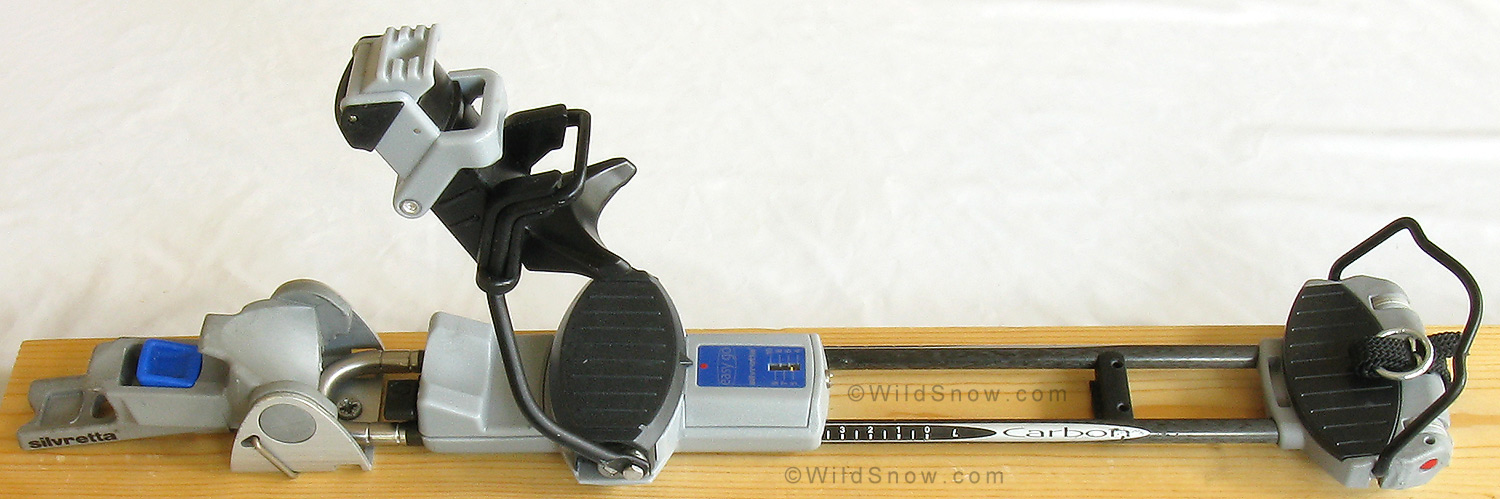
Silvretta 500 Backcountry Skiing Binding – circa 1999
Silvretta 500 Easy Go backcountry skiing binding. Click image to enlarge.
As the only currently manufactured backcountry skiing binding that will accept a welted climbing boot, Silvretta 500 is in a class of its own. More, the 500 is also acceptable as a regular backcountry skiing binding. (By “welted” we mean a boot with notches at toe and heel to accept things such as “clip on” crampons. In the case of using such a boot with Silvretta 500, height of heel is critical and can be modified using shims on the binding heel rest. Optimal heel height would be the same as a backcountry skiing boot, generally around 3 centimeters.)
In 1999, randonnee AT backcountry skiing bindings continued evolving at a satisfying clip. Silvretta was still selling the now venerable Silvretta 404, but modern materials science dictated an upgrade. To that end, Silvretta came up with two bindings that were nearly identical in function to the 404, but made much greater use of plastics and carbon fiber.
The new series was marketed as the Easy Go, and was obviously an attempt to take back market share from Fritschi, who released the excellent Diamir Titanal II upgrade that same year.
Easy Go 500 covered here is still in production as of 2010. It uses a heel unit very similar to the 404 model and a toe wire that is still compatible with any welted boot (beloved by climbers as an approach binding).
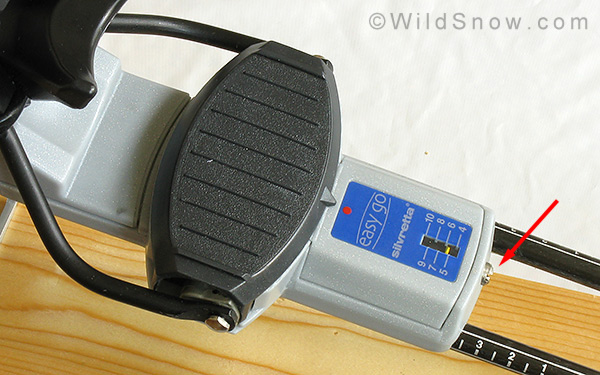
Lateral release is adjusted with the indicated screw, release value shown on scale.
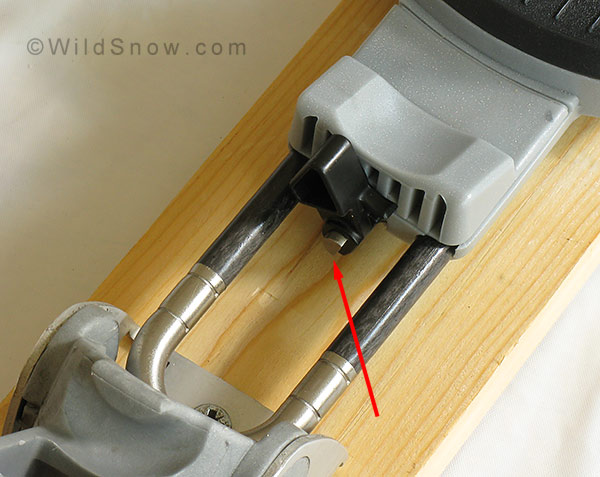
The binding was sold in several lengths, with fine length adjustment done by releasing the black plastic catch and sliding the heel unit along the rails. Binding length and forward pressure ( preload) is correct when boot snaps in and metal stud moves flush with plastic of the lever. (LATTER DETAIL ADDED FOR THOSE STILL USING THIS BINDING).
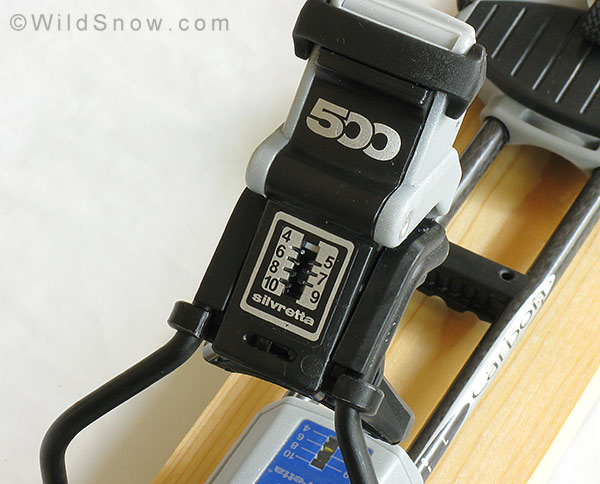
As mentioned above, the 500 heel unit is basically the same as a Silvretta model 404. Change setting by flipping open a hatch on top of the heel unit and rotating an obvious screw head.
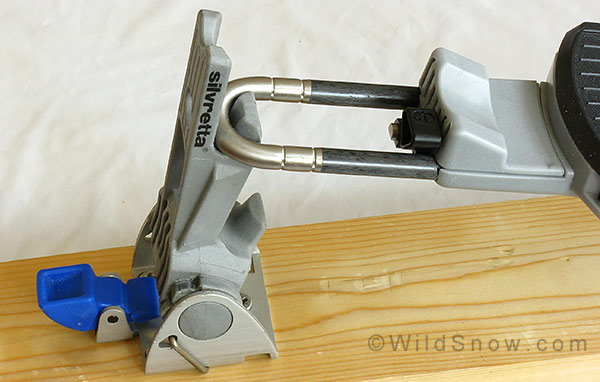
Heel lifter has three positions, highest shown here. Blue part is a catch that allows release from alpine mode by pushing down with a ski pole tip (as model 404 does as well).
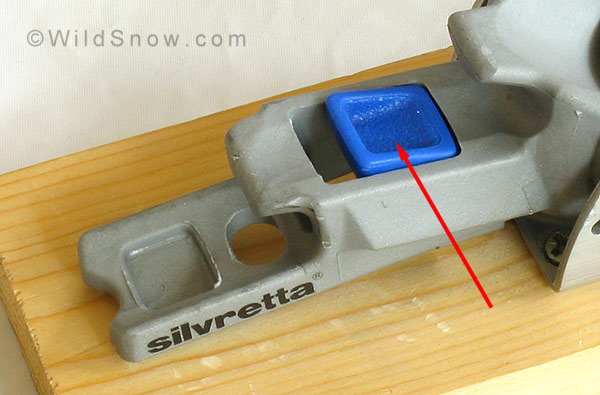
Another view of mode change catch.
There were no unusual problems with this binding, but many consumers looking for a more alpine-like rig have continued to favor grabbers with a more conventional looking release mechanism. Whatever the case, Silvretta deserves credit for upgrading the 404 to the 500, but at the same time keeping the binding compatible with any welted boot.
If you need to put a 500 on some skis, our WildSnow mounting instructions are here.
Also, since Silvretta 404 has nearly identical release mechanicals to the 500, check our Silvretta 404 display for more details.
Weight (one binding with screws, no brake): 29 ounces, 814 grams. This being a significant savings over the 36.3 ounce model 404.
This binding was provided by Garmont USA back when they were the Silvretta importers. As of this writing (2010) Silvretta is imported by Salewa North America and the 500 is still being manufactured and sold.
Silvretta 500 thumbnail.
