
This year’s OR show had a ton of interesting products. I’m probably most excited about the new lightweight stiff boots coming out from nearly every backcountry skiing boot maker. However, quite a few other interesting items caught my attention.
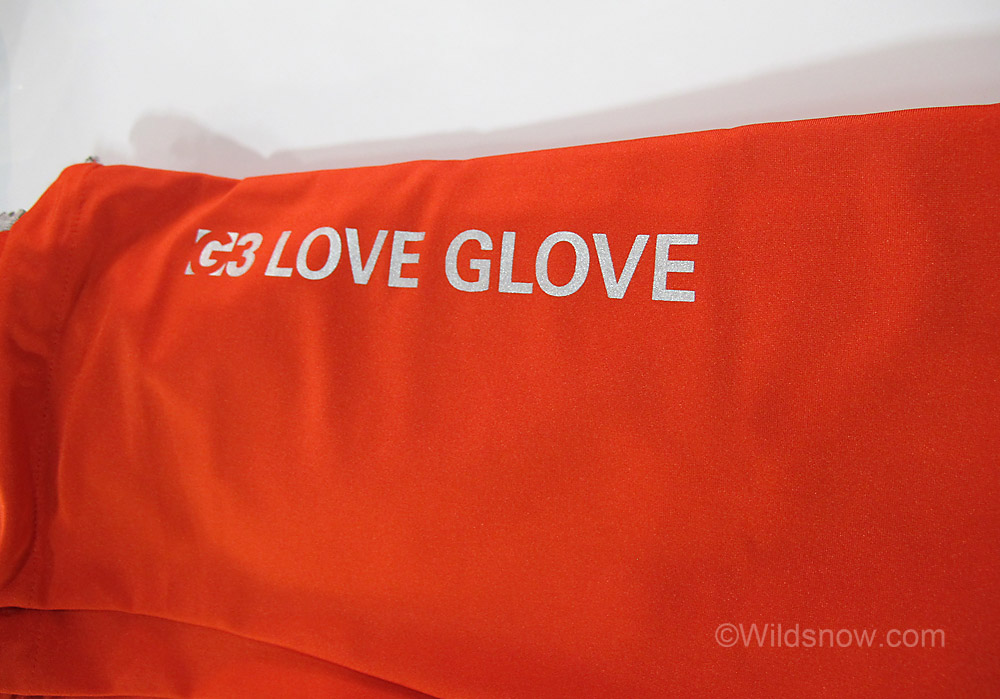
Can you guess what this is? I thought it was pretty cool.
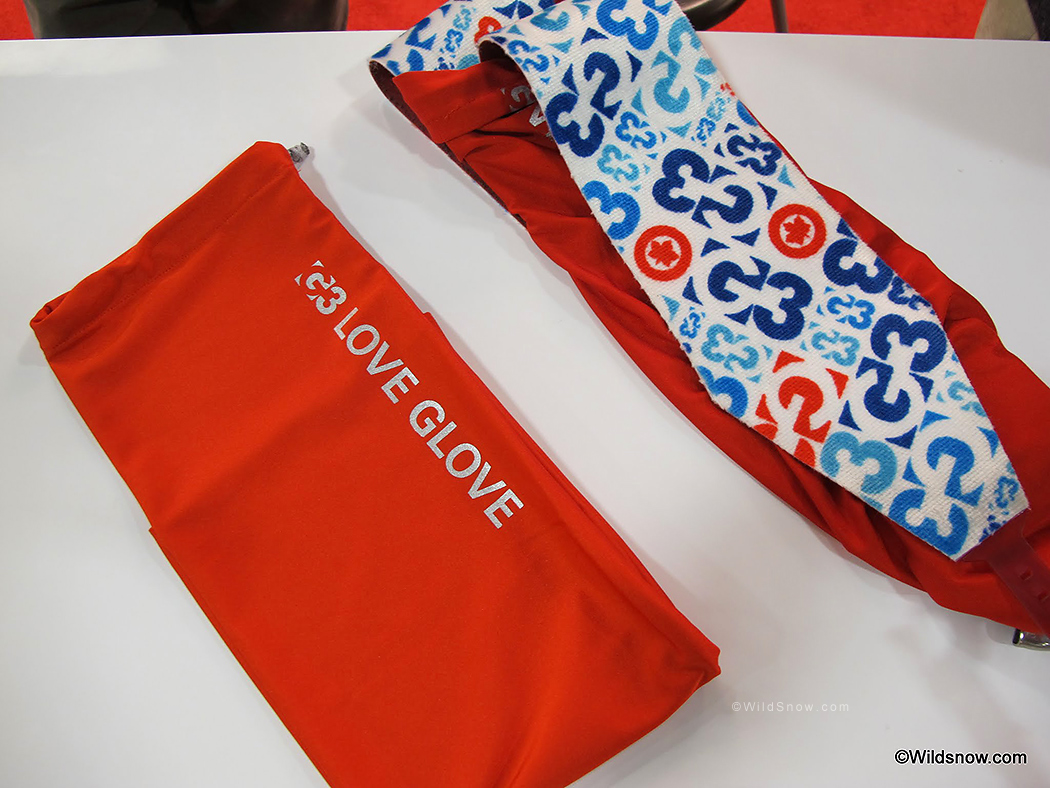
Love Glove in action.
G3’s new skin bag, the Love Glove, looks excellent. It allows you to fold your skins easily without sticking them together, while still protecting them from dirt. I don’t usually use a skin bag, preferring instead to put them directly in my pack. With fatter skins, it’s quite a bit of work to pull them apart, so I think I’m going to give the “Love Glove” a try. My only concern is that without glue-glue contact, the glue might still get contaminated more easily with dirt and lint floating around inside your pack. We’ll see. If nothing else, this is the solution for those of you who are fed up with skins that take 300 calories and pumped shoulder muscles just to pull apart.
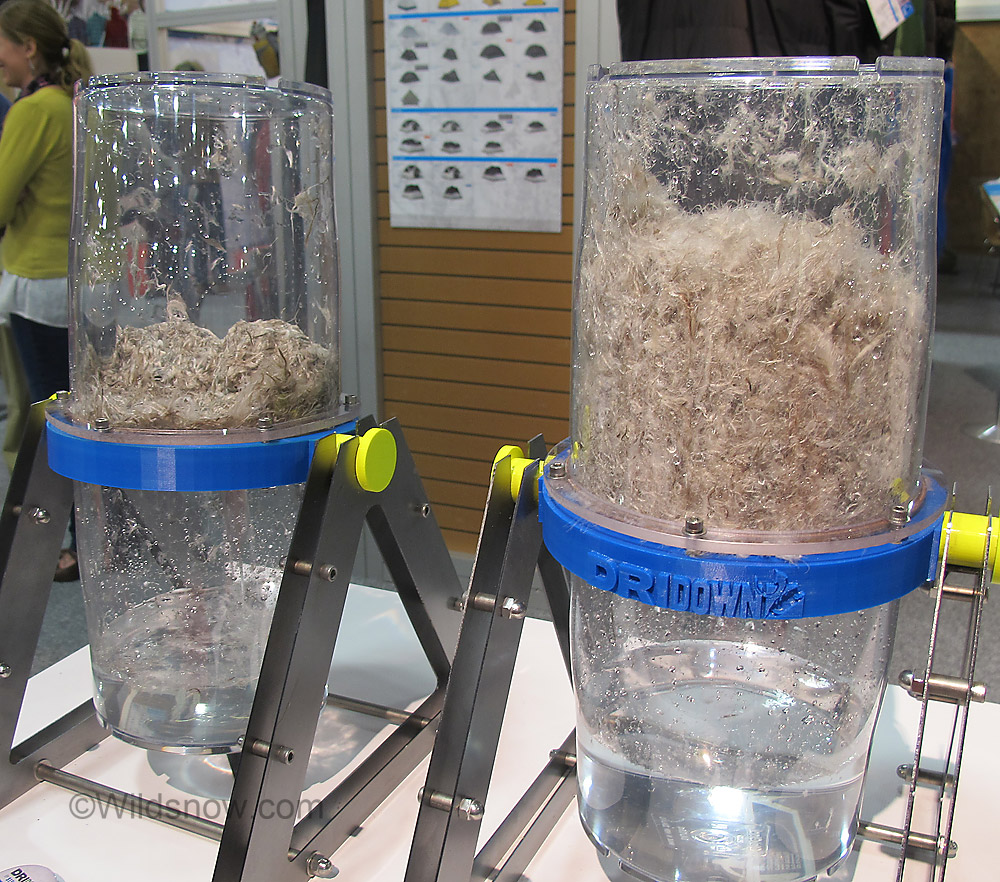
Dridown display at the Sierra Designs booth.
The new polymer treated down, like Sierra Designs Dridown, looks interesting. It appears to have impressive water resistance, although probably not as much as synthetic insulation. However, the weight is of course still down-light and compressibility follows suit. I do wonder how this stuff will work after a few months of use — most DWR treated fabrics decrease in water resistance fairly quickly from dirt and grime. Sierra designs is only using lower fill-volume down in their Dridown gear, in order to keep the price down, although Brooks Range is making a jacket with some 750 fill dry treated down. Sierra Designs has some sleeping bags filled with the stuff, could be nice.
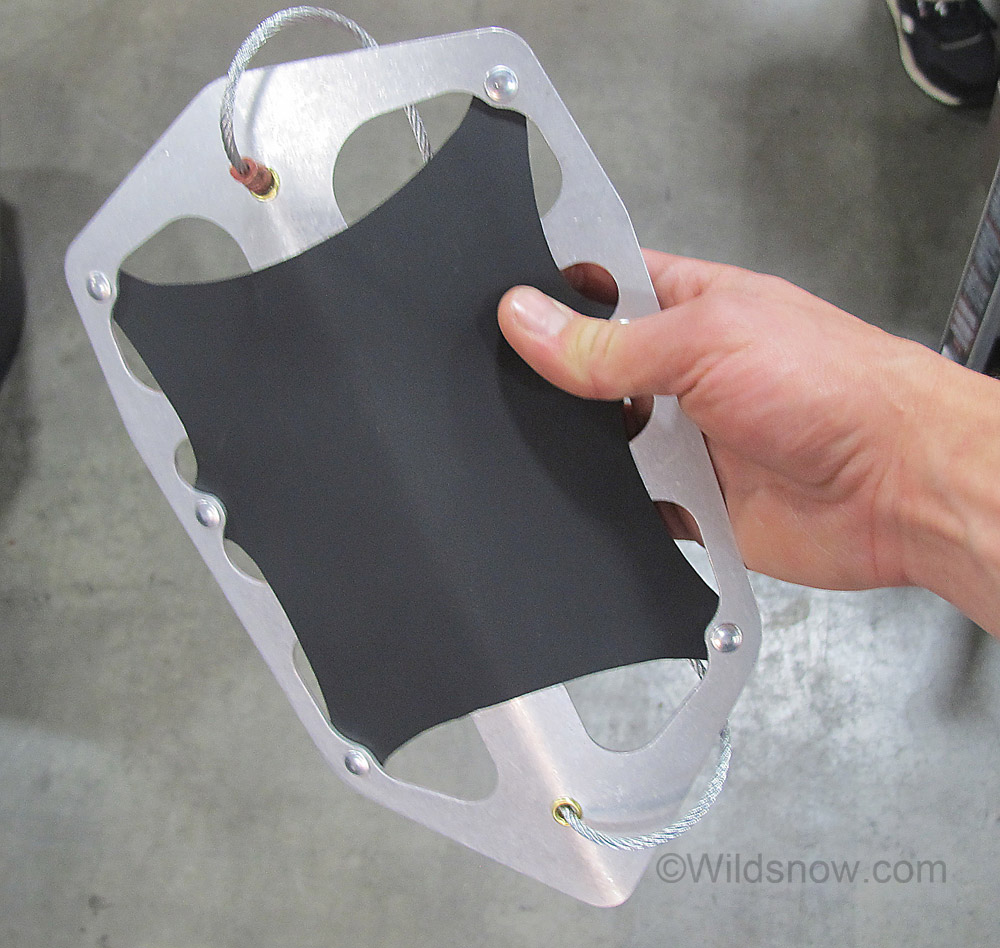
Updated MSR snow fluke, large version.
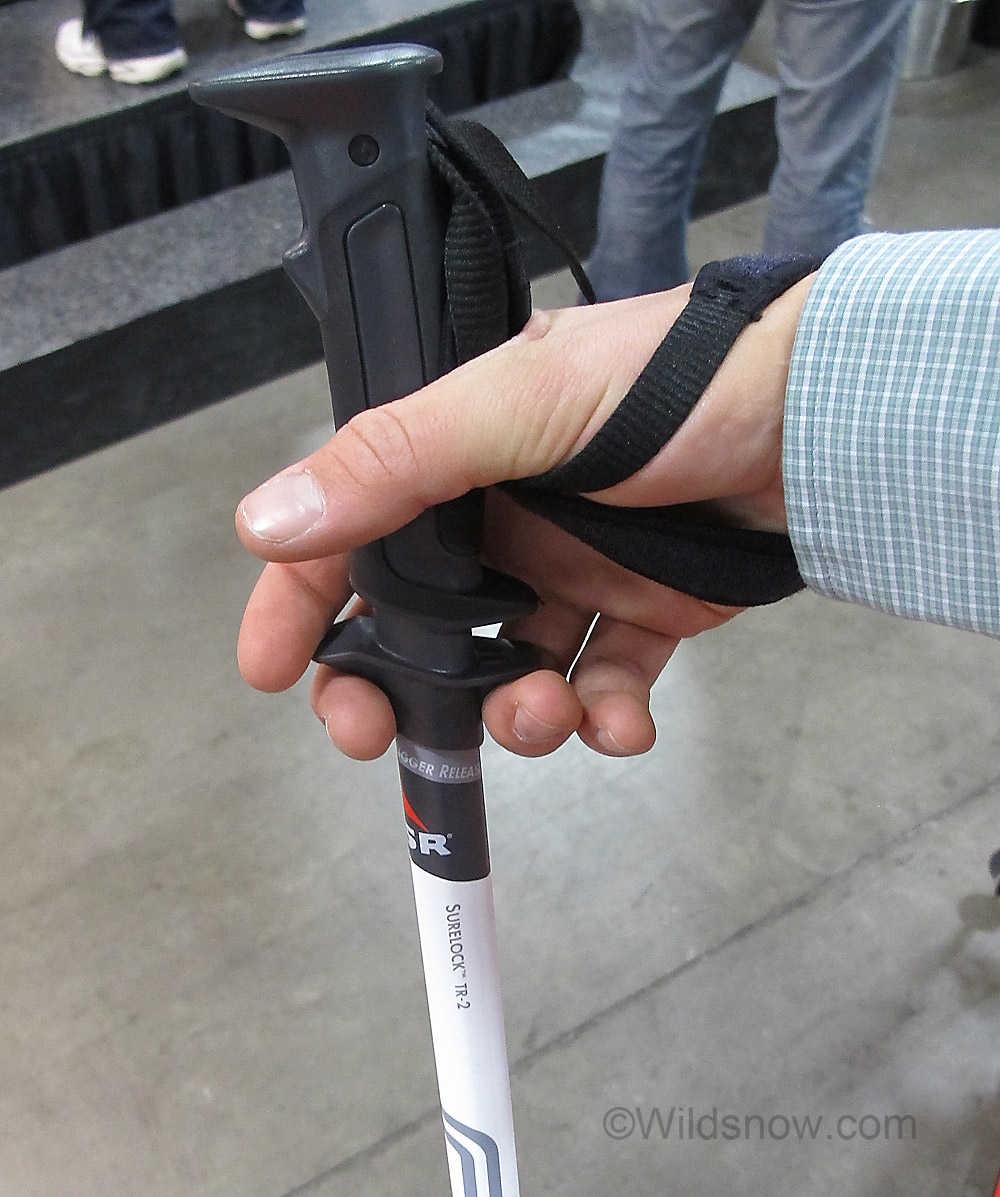
MSR adjustable pole. You pull up on the lower plastic piece to adjust the pole.
MSR has a few cool products coming out this year. They updated their basic snow fluke, reducing aluminum and adding fabric in it’s place, in order to reduce mass. Significantly lighter. Their new adjustable pole is interesting as well, you can adjust the height quickly from just underneath the handle. Could be useful for adjusting your ski poles on the skintrack.
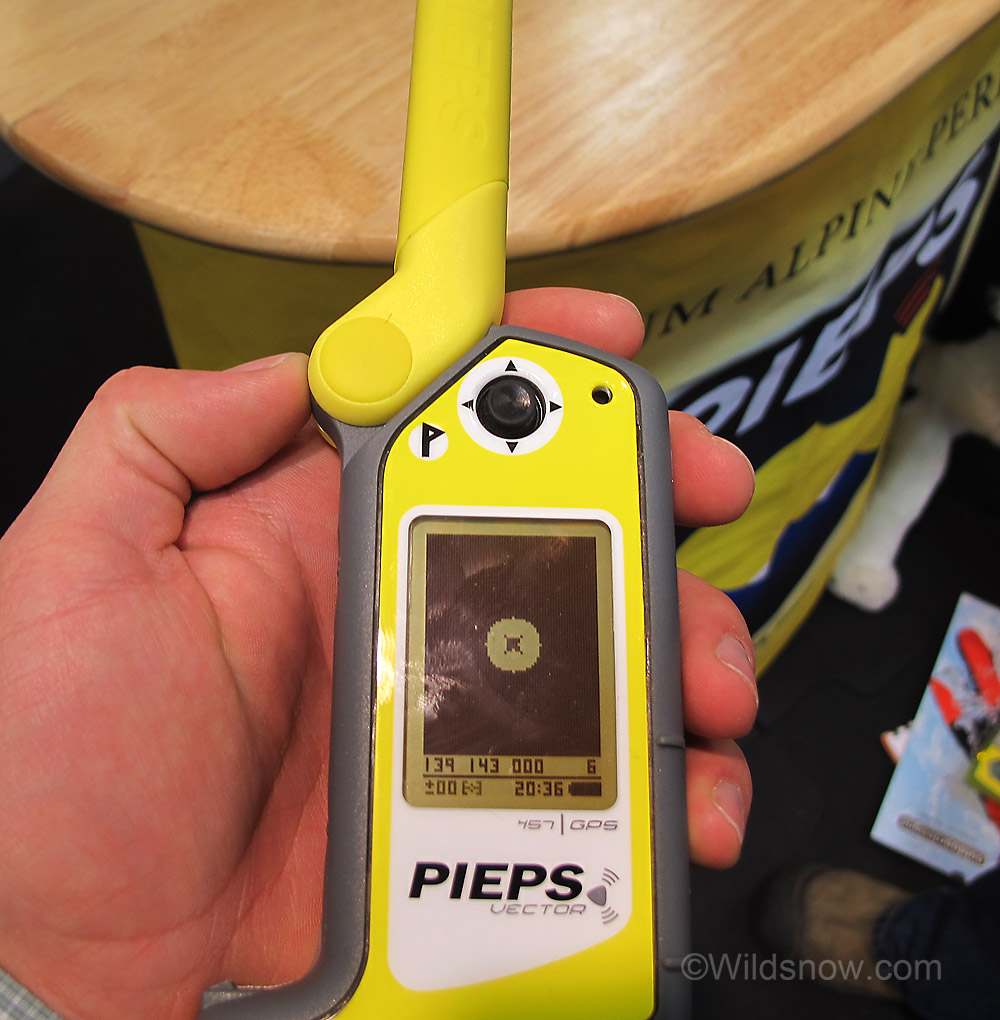
Pieps beacon in 'map mode.' The clear circle represents the beacon range (with the beacon as the x in the center). The black represents everywhere you haven't covered, can be zoomed in and out.
I was able to check out Pieps new Vector beacon as well, over at the Liberty Mountain booth. It is packed with a ton of features. When you first go into search mode, and start zig-zagging down the slide path, Vector enters into “map mode” which utilizes GPS to show if you missed any sections during your search. I tend to over-compensate significantly when doing the initial zig-zag search, which probably adds a bit of time to the search, having GPS mapping could get me out of that habit. The Pieps has some other nice features as well, include the flip out antenna, which helps increase range and responsiveness. My only concern is this beacon might be a little complicated, especially since it has various modes and functions that can be accessed during search mode.
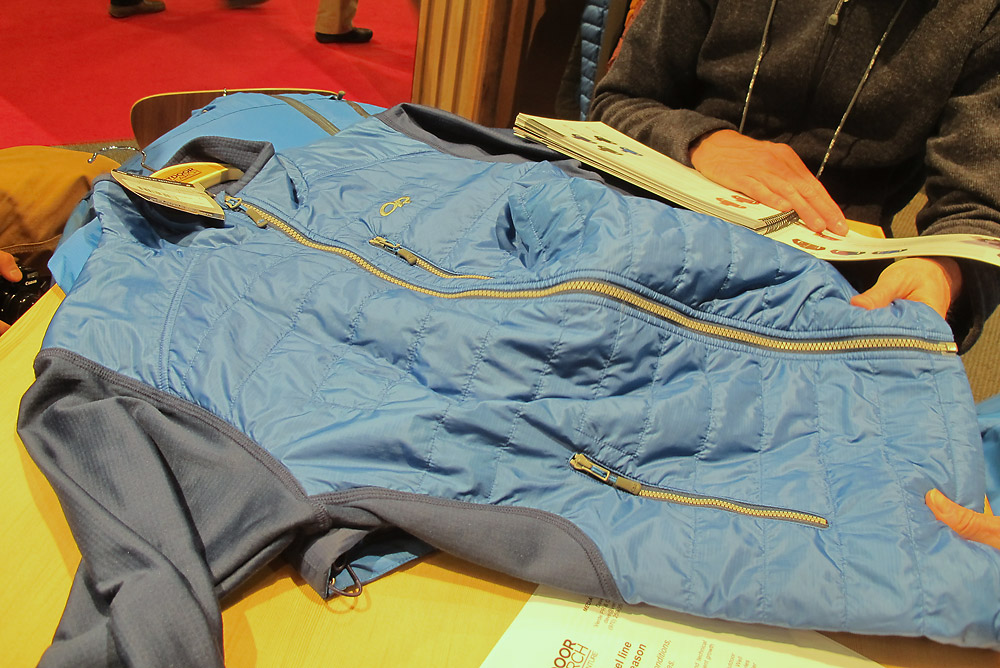
Outdoor Research Acetylene jacket.
I’m always on the lookout for lightweight insulation layers, and OR’s Acetylene jacket looked pretty cool. It has puffy synthetic insulation in the front, and thin fleece everywhere else. Saves a bit of weight, and I bet adds some breathability.
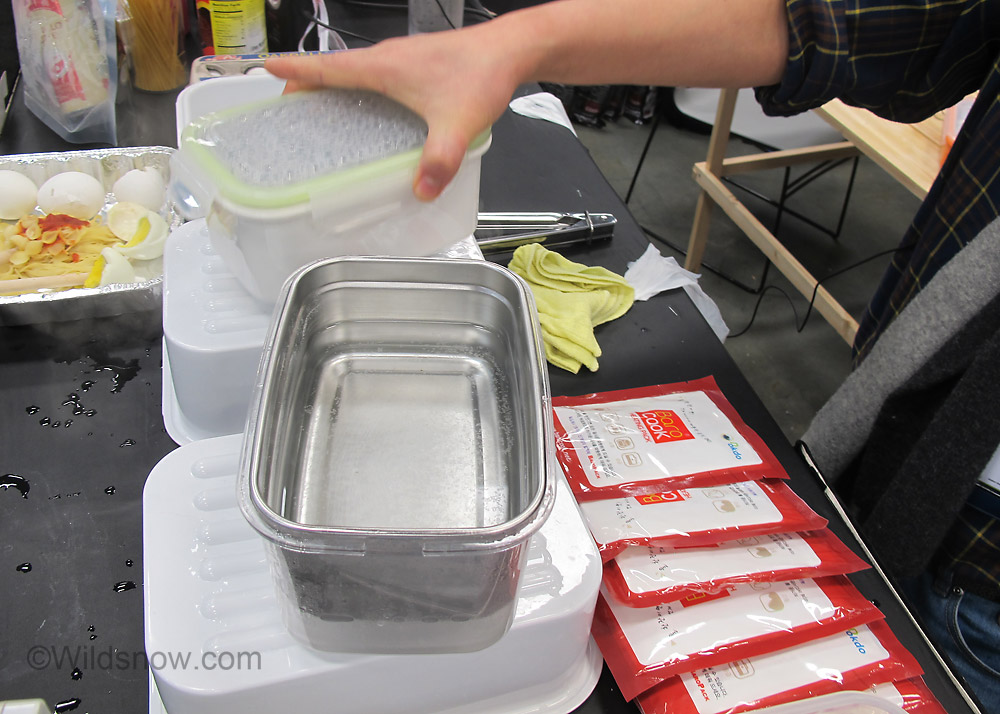
BaroCook packets in the lower right.
And now for the oddball! I usually spend a bit of time checking out the little start-up booths tucked away in the corners of the show, as they can have some interesting stuff. Barocook took the cake this year. They make chemical heat packs (or according to their Koreanglish website, “semi-permanent heating boxes”), similar to military MREs, for boiling water and cooking food. Really just chemical warming packs on steroids, these appear to get hot fast when doused with water, and subsequently produce copious BTUs.
On long day trips, I often carry a stove for melting snow, since it’s somewhat unreasonable to haul the weight of more than about 2 liters of water. Unfortunately, that means you have to stop, set up everything, and then wait while your water cooks. On fast days, I prefer to keep my breaks short, so sometimes I forgo hydration for time’s sake even when I’ve got a stove. Not only that, but with stove you also have to carry windscreen and pot, which adds quite a bit of weight and bulk. I’ve thought about figuring out some way to melt snow “on the go,” in your pack while your hiking. The Baro heat packs looked like they might be a solution, just throw one in a bottle full of snow, stop once or twice to top it off, and voila! In half an hour you have an extra liter of water. Their demo looked like it got pretty hot though, I’d hope it wouldn’t melt a hole through your pack. We shall see.
Louie Dawson earned his Bachelor Degree in Industrial Design from Western Washington University in 2014. When he’s not skiing Mount Baker or somewhere equally as snowy, he’s thinking about new products to make ski mountaineering more fun and safe.