
Skin Glue Mojo
New age guru self-help here at Wild Snow urging you to tap into your inner stickiness? Perish the thought! Instead, we’re on the prosaic fact that under certain circumstances, skin glue can truly be reactivated without regluing.
First, the easier fixes that have worked for me.
Glue inevitably picks up various bits of forestry. Those late-season below-treeline approaches can be really bad for this, ditto for skinning at New England ski areas after season closure. Especially large offenders can be picked out with your fingers or tweezers, but typically it is death by a thousand cuts — you’d drive yourself crazy trying to pick out every little offending item.
This repair is easy: Place a strip from a plain-old brown paper bag over the skin glue, run your hot iron over the bag, then lift away the brown paper that now contains your little friends from the woods. Depending on what is left behind, you might be able to get away without bothering to reglue.
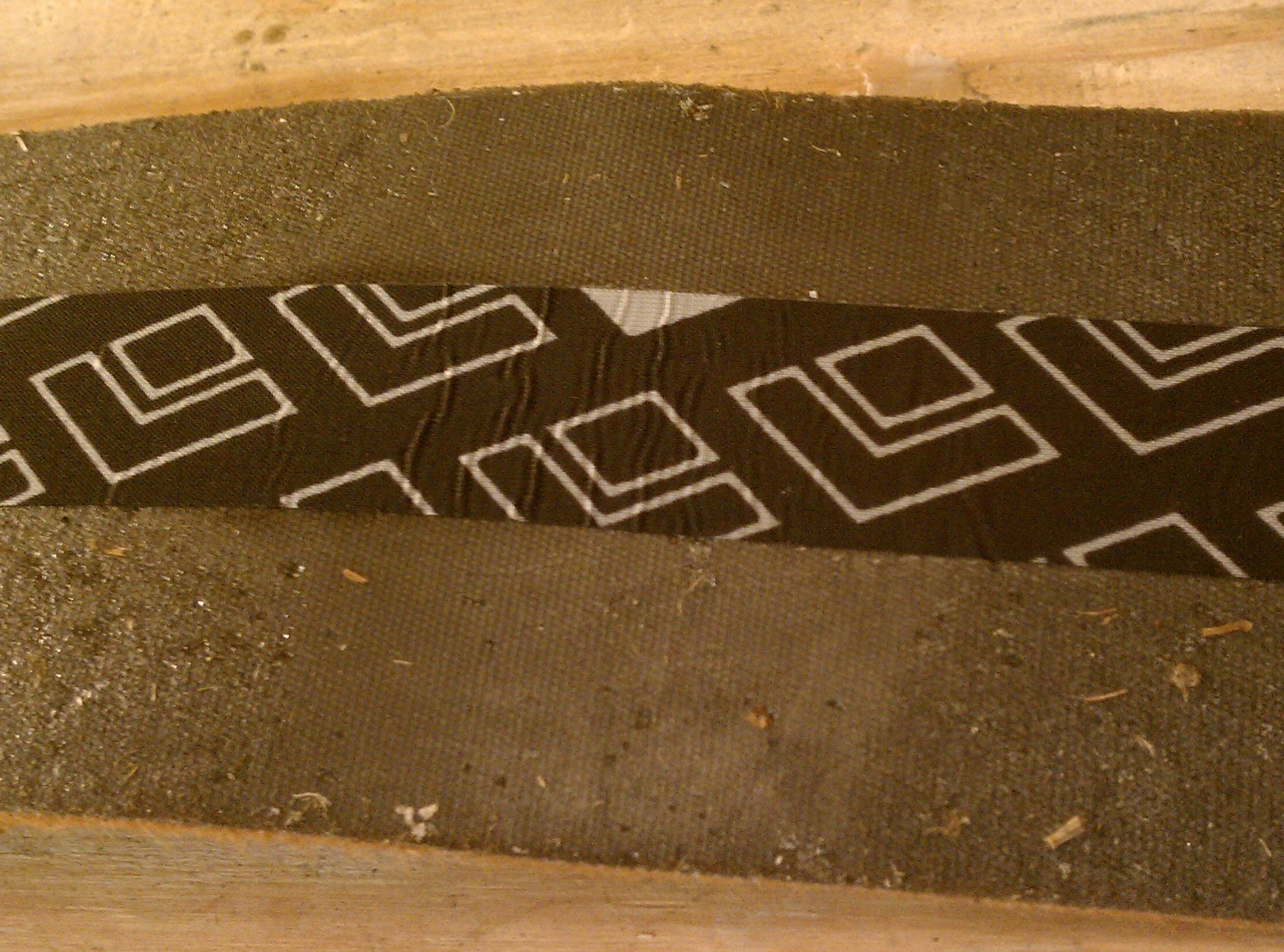
Now for the main event. Several times I’ve had glue sections that simply would no longer stick reliably. Those sections were either nearly perfectly clean or the contaminants were too minor to explain the lack of adhesion. The glue was not missing, as poking around with a fingernail clearly revealed its original copious presence, although its original sheen had been transformed into a rather dull appearance. The bottom line is that the skin’s tack was simply gone.
My understanding is that this results from free water being pressed into the skin glue. And my experience with this certainly seems correlated with springtime skinning in super-warm temps.
Fortunately the fix is easy (and is essentially the final set of steps in hot reglueing):
1. On the offending sections, put down the white release paper that originally came with your BD skins. (You did save all of that, didn’t you? If not, try BD customer service.) Be sure to place the slicker side against the glue. The difference between the two sides is somewhat subtle, yet important!
2. Place your hot iron over the release paper until you sense that the glue on your backcountry skiing climbing skins is becoming somewhat molten. Several seconds should do the trick.
3. Roll the skin+paper combo with a rolling pin or some other hard cylindrical object. In the picture I’m using liquid wax container, but I should buy a dedicated rolling pin for this.
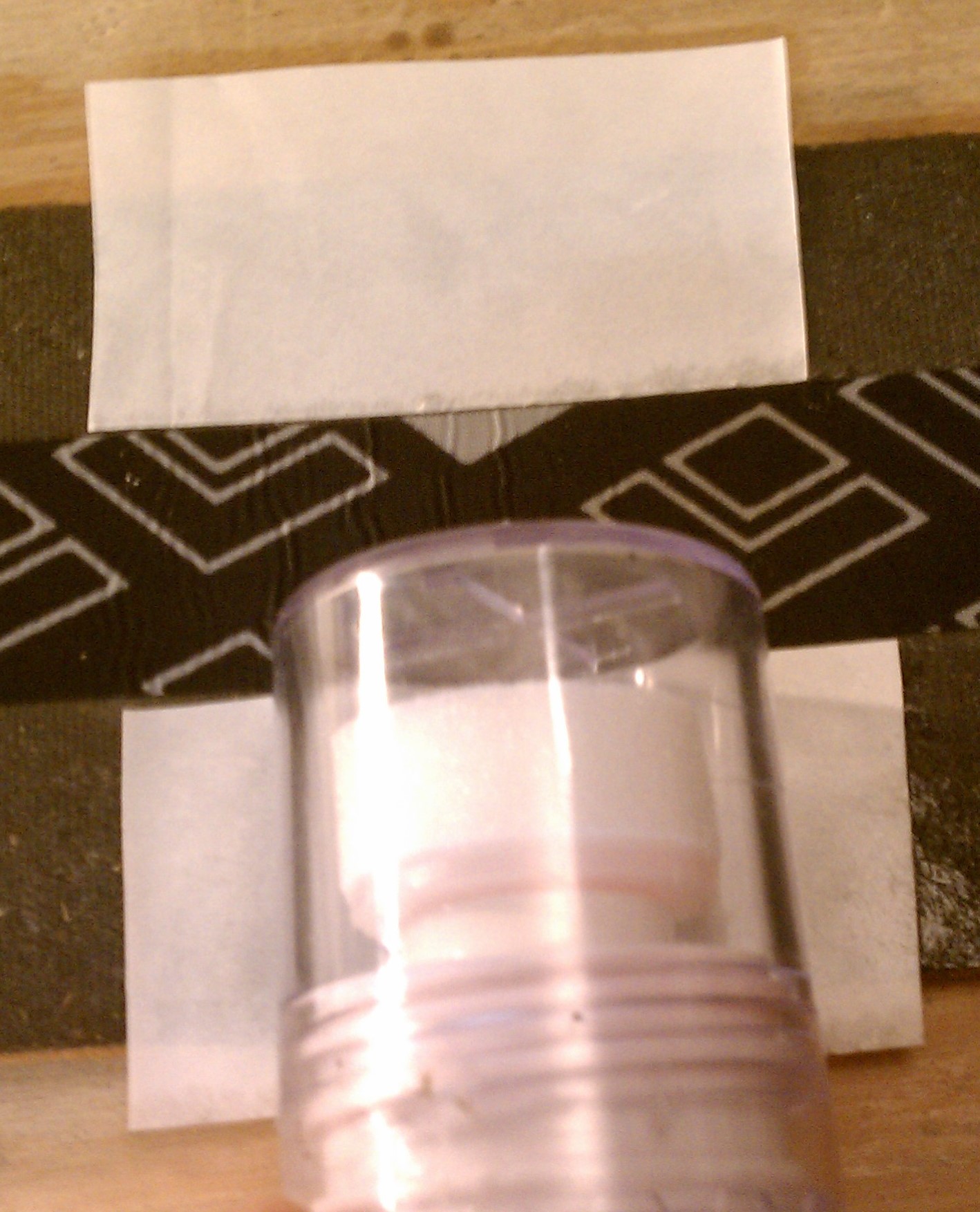
4. Remove the release paper to reveal some nicely pressed-in glue with its original sheen and tack restored. (Rarely the release paper doesn’t release all that cleanly, and you’ll need a re-do.)
Accomplishing all of the above steps takes less time than typing them out here. (But be sure to let the skin cool down completely – and then some – before skinning or even just sticking to itself.)
Despite our optimistic how-to described above, sometimes you really do need a reglue. This necessity can arise if glue has been stripped off the skin backing when it stuck to the ski base (rarely) or to the other side of the skin (which can be prevented during longer-term indoor storage by using mesh “cheat sheets”).
When the need to reglue does arise, personally I prefer to keep as much of the original glue on the skin. So I clean with a brown paper bag as much as I can then scrape off the glue only from those sections that look hopeless. Others like to start anew by removing all the original glue (which supposedly can be done by dry cleaners – trust, but verify). Either way, use plenty of ventilation, preferably outside. (A garage with open bays, doors, and windows works well, as does a screened-in porch; no bugs in the glue.)
A few sentences about a super-quick and easy yet one-time fix with BD skins: The commonly termed “glueless” strip is really a taped-over strip. Easily remove (even in the field) that section of plastic-like fabric running down the center to expose 100-percent fresh glue. But since this fix works only once, I prefer to save it for emergency purposes in the field.
Happy skinning and backcountry skiing!
(WildSnow guest blogger Jonathan Shefftz lives with his wife and daughter in Western Massachusetts, where he is a member of the Northfield Mountain and Thunderbolt / Mt Greylock ski patrols. Formerly an NCAA alpine race coach, he has broken free from his prior dependence on mechanized ascension to become far more enamored of self-propelled forms of skiing. He is an AIARE-qualified instructor, NSP avalanche instructor, and contributor to the American Avalanche Association’s The Avalanche Review. When he is not searching out elusive freshies in Southern New England or promoting the NE Rando Race Series, he works as a financial economics consultant.)
Comments
54 Responses to “Skin Glue Mojo”
Got something to say? Please do so.


Adding a couple thin layers of Gold Label skin glue, with a few hours drying time between coats, will work wonders too.
Great post! Just what I had on my mind recently, but I have Stoke Speedskins that don’t seem to stick good despite only being used about 9 times. Sounds like those last few ski hikes in May might have done it. My skins came with these blue plastic backers, can I use those for ironing? Hope I don’t sound stupid, new to sport
Shail, don’t use the plastic for ironing, get some of the white stuff as Jonathan suggests. You could also just try a few layers of Gold Label over existing glue. I’d do that first, in the fall. Lou
Swing by the shop, Shail. We got lots of the BD paper stashed in the back for these types of fixes.
Cool, thanks for all the advice! Are you “in” now Alyn? LOL this summer hasn’t even started and it’s already over. Weather looks good for Mt. Baker this wknd:D
Adding a couple thin layers of Gold Label certainly works well, but if your skin glue still seems to be there, just no longer tacky, the reactivation method works well with almost no effort & cost.
For my Dynafit Speedskins, despite rather thin glue, they’re still good as new after a few season . . . but I’ve use them only in clean winter snow, no wet and/or dirty snow (which I think is the enemy of skin glue).
I ski a lot on wet snow, dirty snow, wet dirt, mud, etc. At a certain point, your skins will become contaminated with crud and you’ll need to remove the old glue and aplly new. After 5 years of hard use, I needed to do this in May. Forget the brown bag trick. Get a hair dryer or heat gun and a plastic or metal scraper. Heat a short section, then scrape the old glue off. You’ll not only get the glue OFF the skins, but you’ll get it OUT of the skin material. I was stunned at how clean my skins were after a bit of effort. It took a whole tube of BD skin glue to reglue my skins for my Wateas and Coombas.
You know what’s annoying? The fact that BD’s “Gold Label” skin glue now has a silver label. WTF?
~mike
Jonathan, thanks for the “glue” maintenance review. I am about to attempt “reactivation”. Two questions first:
1) How hot is “hot” on your iron? Cotton setting? What about a waxing iron with temps listed?
2) Digressing a teeny bit: The fur on my BD nylon skins is filfthy after the spring/summer skiing here in western WA. Mostly due to forest debris on the snow. They still seem to work OK, but the Mr. Clean in me really wants to clean those puppies…should I? If yes, any hints? Thanks for your help.
clean them!
don’t be afraid to maintain your gear
it’s just nylon
use a mild detergent or just plain old hot water and a rag and scrub the plush
after they areclean, let them dry – then use skin wax or some sort of water repellent (or just plain ski wax) to make them just like new
again – don’t be afraid to maintain your gear
Thank you Jonathan for that tip. You truly are the Martha Stewart of backcountry skiing
I set my iron at the same temp that I use for soft-but-not-the-very-softest wax (e.g., CH8, or something for temps in the high 20s F).
If you do scrub the plush, try to comb it afterwards to keep the hairs aligned. The Volken even recommends doing this after every outing, and says that after a while skins are less efficient as the hairs are no longer aligned.
(Hmm, Martha Stewart — well, if you saw how dirty my light beige Schoeller pants are, you might reconsider that compliment!)
Nice post. It may be a little much, but when my skins are really bad, I use my blow torch attachment on a little propane tank and a metal putty scraper. Heat that blade up and that glue comes right off. I work in smaller sections. The glue comes off so easy and clean. Then I use the Gold Label to reglue. I have a stash of the old kind as a think it is hard to find these days!
Telemike, Jonathan, et al, Thanks. Of course, the conspiracy to get us all on ever fatter skis almost makes the cleaning of older skins seem futile, in that I will just need fatter ones next season anyway…just kidding.
What about the problem of skins that are too sticky? The skins I use mostly in spring conditions leave a residue on the tips and tails. I have used BD skins almost exclusively, and have never had problems with them losing their tack, always the opposite– the glue gets gummy.
Thanks for all the useful information and helpful attention to detail.
“What about the problem of skins that are too sticky?”
– A partner was once complaining about that. My reply was, “be careful what you wish for!”
What can I do if my skins lose their tack while skining on the mountain? It generally happens to me if I get water on the ski or skin.
“What can I do if my skins lose their tack while skining on the mountain? It generally happens to me if I get water on the ski or skin.”
Bring an iron with a really long extension cord?
Seriously though, I think the key is prevention. A few tips:
1. Keep your skins in good shape before each outing. Even under the worst conditions, I doubt that skin glue is going to go from excellent to disfunctional in a single tour. Usually the culprit is that the skin glue has already strayed into “fair” terrority, and then a tour under difficult conditions is the straw that breaks the camel’s back.
2. Put the skins on at home, where you can take the extra time to press them on very aggressively. I always skin wax, not because I care about the plush, but b/c I can concentrate the pressure more with a small bar of wax than I can with my bare hand.
3. For subsequent transitions, try to get the base as dry as possible. When I’m running laps at a closed ski area in the spring, I station a rag at my transition point. Otherwise, bring some napkins or paper towels with you.
4. And once again, try to press on the skin as aggressively as possible, using a bar of wax to concentrate the pressure.
If the skin has losts its tack entirely, you could remove the BD fabric strip, but as I wrote earlier, I prefer to save that for whenever I might really really need it.
I was lucky to buy a width of skin that has worked on two pairs of BD Verdicts and then Drifts. This single pair of Ascension skins have lasted five seasons of use (600 days) on my one ski quivers. The glue looks like crap but is perfectly tacky. They get comments.
. The glue has built up over the years with “globs” developing. The orange plush is faded and stained with all sorts of things. Fortunately, I do not have a dog, cat or spend time dealing with forests. Thus I ski in a generally sterile arena except for rocks and some tundra.
All I do is slap on Gold Seal for touch ups. Hot scrape repairs happen typically at the tip, tail and waist areas which leaves a lot of skin with little need for touch up. The glue has built up pretty good over the years with a few “globs” developing but otherwise, they require little maintenance. I used to be pretty “nasal” about keeping my skin glue as clean as possible as if it actually helped…. It really doesn’t. Turns out even dirty glue works well enough, so it is OK to have dirtbag looking skins.
When I put my skins on the night before, I try to have the skins on as lightly as possible and not pressed hard to the ski. They hang just off the bases, loosely, etc.. (its a ritual thing). When I get to the trailhead, I “set” the skins by hand pressing tip to tail. When I get to the top, they peel off ass easily as a banana skin as they always have. Sweet!!!
I have to replace these skins as the riveted attachment pieces have some small tears around them and the skins have developed a stretch that curls them at the tail and along the edges at the ski tip. Some of the glue deeper down is the factory glue ….so enough is enough. Looking forward to new skins for 2011/12.
Use-em, remove-em, slap-em together, stash-em (forget the bag) and go ski. Every 50 or so days give them a touch up. They should last for years.
“Cotton” is too hot, Dan.
Somewhere on the low end of “wool” on a thrift store iron, or on the high end of the wax scale with a wax-specific iron, ie. 145 C is probably your best bet.
http://www.blackdiamondequipment.com/en-us/shop/ski/skins/glue-renew-transfer
a vid and some written instructions from BD suggesting you use a beer bottle as a glue roller
“”Application temperature: The transfer only works when the glue
reaches 155-171° C (310-340° F). Most Hot Waxing irons do not
reach high enough temperatures. Check instructions to make
sure your iron reaches these temperatures. For clothing irons, the
setting could be between Wool-factory specification when new of
166° C (330° F) and Cotton-factory specification when new of 193°
C (380° F), but depends on the make and model. Use caution to
remain within these temperatures “”.
another good write up and probably the 1st time I seen it suggested that you need to heat a reglue job for best results
http://www.telemarktalk.com/phpBB/viewtopic.php?p=751280#751280
Here’s a different problem. I’ve noticed tiny bits of glue adhering to the ski base lightly speckled all along the ski after touring. I can feel it when running my hand over the base more than I can see it. It comes off with citrus cleaner and a hard rub with a paper towel. I re-wax every 3 days, don’t apply the skins until getting in the car for the 1 hour drive to the trailhead, and either tuck them in my jacket for the descents or strap them to one of my shoulder straps with bungee loops for a quick-draw transition, and air dry them in the mud room at day’s end. They are Ascensions with around 50 days on them and original glue that is only minimally contaminated.
In retrospect, I may be perpetuating the problem with the citrus cleaner if it is soaking into the ski base and seeping out with the next tour thereby dissolving a little more glue from the applied skin, but then why did it happen to begin with? Could applying a minimally warm iron to the plush side after applying skin wax to work it in contribute to the problem? Perhaps I should use something other than citrus cleaner to remove the glue from the base, or use something to more thoroughly remove the citrus cleaner, or – ahem – it’s time for new skis. Thoughts?
Some thoughts that may (or may not) help:
1. A well-waxed base assists with both skin adhesion and “clean” skin removal. By “well-waxed” I mean hot waxing followed by a cool down and then two or three rounds of alternated scraping and brushing. I know, it’s a pain, but before big days, I always try to do this.
2. For dirty ski bases, hot wax with your softest warmest wax, then immediately scrape. A few rounds of this might be necessary. I know, an even bigger pain, but keeps your bases in much better shape than using a solvent (whether citrus or otherwise).
3. If the skin glue seems kind of gloppy/goopy, then the “reactivation” method will help to restore some semblance of order.
“a vid and some written instructions from BD [...]”
– Those instructions are specific to the transfer sheets (as opposed to the plain-old glue, whether the old container or the new tube).
“probably the 1st time I seen it suggested that you need to heat a reglue job for best results”
– The BD instructions have always specified that. In a pinch, just painting on the glue and then letting it dry is better than nothing. But the heat method produces much better results.
I had heard you could get your skins drycleaned and went and chatted with the local cleaner. They though it would work great to get the glue off but would melt any plastic. So if it is just skin for about 5 bucks they can be factory clean and ready for reglue. But my G3 alpinists have plastic so I do a combo paperbag/scrape method and super thin coats of gold label.
Thanks, I’ll try the soft wax / immediate scrape and repeat method as well as reactivating the glue.
Thomas, can’t they just put a bit of dry cleaning fluid on a rag and rub on your plastic to see if it’s a problem? Clothing has plastic zippers and snaps, among other things, so it must be that _some_ plastics get wrecked by dry cleaning fluid, but not all. My understanding is that tetrachloroethylene is used, is that still the case? If so, you can get that stuff in a hardware store, can’t you?
Wiki says that indeed they have to be careful while dry cleaning because some plastics will dissolve.
http://en.wikipedia.org/wiki/Dry_cleaning
I like the gold label glue, but in my experience, the iron on BD glue should be avoided. It is hard to use, and the results are not very good. It is excessively “sticky”, and, the skins are hard to separate, plus the glue is pulled apart when separating the skins leaving bits of it on the separated parts.
Bar, I tried that stuff as well and didn’t have much success. The solvent based paint-on is indeed much better. Probably not as green, but then, I’ll worry about the power plant emissions from my electricity supply before I worry about painting on some skin glue a few times a year.
Last week my G3 skins (new in 2009) decided they didn’t want to come off the cheat sheets and that they wanted to stick to each other permanently *and* to transfer glue to the ski bases.
I got the glue off the bases by soaking with citrus solvent first then scraping with a plexi scraper, then touching up problem areas with more citrus and a rag, followed by hot waxing with soft wax and scraping warm, then rewaxing with wax-of-the-day. Not sure what to do with the skins as the glue is sort of rough and “nodular” rather than being in a smooth layer. We don’t have brown paper shopping bags here in Oz, and I haven’t kept any release paper, so am wondering if “greaseproof” baking paper might work – any ideas? I have some Gold Label glue and will likely try that too.
Re using a hot scraper to remove wax: I bought one of these http://www.telemark-pyrenees.com/en/colltexheatedscraper-p-43174.html a while back but haven’t used it in anger yet. I’m still hoping that Clipskins might enable most of this kerfuffle to be dispensed with at some point in the future if Kaj manages to get everything sorted out.
Yipes, now that’s a prime candidate for a complete reglue!
The Colltex tool looks great for completely removing hopeless glue from skins.
(For small touch-up jobs, surprising that paper grocery bags are not used in Australia. Only plastic then? Or do shoppers mainly bring their own reusable bags? I usually bring an old 60L backpack, which is always treated as quite the novelty – especially with my toddler daughter strapped to my chest as all the groceries are strapped to my back.)
Release paper seems like just a form of waxed paper. I’m sure that some baker-related papers would work. Unfortunately, I also imagine that some types would not work! Best to experiment first on some discarded skin scraps, or on a small portion of your skins.
^ The glue still sticks to the waxed ski bases so far, but it also sticks to all those things it’s not meant to, including the cheat sheets which would probably be good for catching flies at present. FYI we only have plastic or reusable shopping bags here; if we ever had paper supermarket bags it was decades ago, although other shops sometimes have paper bags. (Come to think of it I know a bookshop where I can get some.) I usually take a rucksack plus reusable bag(s) to get from the checkout to where I can repack stuff.
I guess it’s Experiments R Us with the skins – or I could use the next-narrowest ones!
Stephen, a lot of pubs and bottle shops still pack bottles in paper bags. If you don’t drink, you can send me the booze! ;-}
Failing that, get craft paper at Officeworks.
3 questions:
1. I’ve lost the cheat sheets that came with my Pomoca skins. I’d rather not pay $30 for new cheat sheets. Does anyone know of a cheatp but effective cheat sheet substitute?
2. Do cheat sheets need to be solid to keep the glue from drying out? Or do they just make it easier to pull the skins apart, so a porous mesh would work as well (like flexible gutter guard)?
3. I’ve always used the Gold Label liquid glue that comes in a can, but apparently that is not made anymore. They only sell it in small tubes. Does anyone know of an equilvalent liquid glue, and where do I get it?
Thanks.
@ Phil:
1. I can see not wanting to pay $30 just for cheat sheets. Fortunately I am willing to sell you one of my extra sets for only $29. Okay, seriously, I once read on Turns All Year that Home Depot (or was it Lowe’s?) has some sort of mesh-type material identical to cheat sheets but intended for some sort of gardening application. (You can tel how much I pay attention to our various plants, although I do enjoy mowing the lawn, especially since I jog while doing it.)
2. Other way around. My understanding is that using the solid sheets that come with Dynafit and some other Euro skins can start to attract too much dust and whatnot, so therefore BD & G3 use mesh instead. (Isn’t gutter guard material too stiff though?)
3. Just recently I used my precious Gold Label can supply, and I haven’t tried my tubes yet. My understanding though is that the tubes are pretty much the same thing (although probably more expensive on a per-ounce basis).
Great tip Jonathan, thanks a lot. I reactivated my very old Camp skins (re-glued with Pomoca glue some years ago), as well as my latest Colltex mix and it worked like a charm. I skipped the rolling part, didn’t seem necessary, just a quick heating and it was done.
For brown paper, actually it seems that any plain paper works.
For release paper, no need for the original one. You can get a lot of suitable paper from your local friendly screen printer, sign maker or similar. It is used as backing paper for adhesives and laminations. It is a waste product so you can get rolls for free.
Just a few words of warning. There are different kinds of coatings, some leave a residue when you rub the surface with your fingers: don’t use those. Also, some are coated on one side, some on both (but with different coating). I recommend the one-sided ones as the iron slides better on the uncoated paper. Just beware that if the uncoated side comes in contact with the glue you’ll not be able to take it off, handle with care.
Personally I used some Avery brand material, most likely a DOL2800 or DOL3000 series (can’t remember but looks the same).
This kind of paper is also great for long term storage of skins, it’s a few years that I use it. In this case a double side coating is desirable as makes handling easier (but still note that there is only one good side, the other will just be not as sticky as plain paper). Again, do some tests, not all the paper works the same.
Please note, *DO NOT* use it on wet skin or the paper will absorb humidity and stick permanently, you’ll need to re-glue when you try to remove it and it delaminates.
For Home Depot cheat sheets, use Phifer 36 ” x 84″ Black Pet Screen or similar. $16.50 for a 36″ X 84″ roll. Enough for several skin pairs. Actually, when I re screened my patio door, the trimmed excess was enough for 2 skin pairs. 2 seasons of storage with no issues.
I followed this to try and get all the little bits of twigs and fluff out of my skins.
It worked really well (grease proof paper and ‘wool’ iron) for my Dynafit skins which pretty old, although worth noting some glue does come away with the dirt so it’s not something I’d want to do very often.
However I did not have any success in getting anything out of my new-this-year BD skins as if I left the glue to melt enough for inclusions to come out rather a lot of glue came too. Decided just to pick out what I could of the big bits and then smooth out the glue, again grease proof paper, ‘wool’ iron and beer bottle worked well.
I recently purchased G3 skins and threw them onto a pair of soloman ski’s… i left them overnight after trimming them (thinking it would make my morning prep quicker and easier) and then headed out into a -10F day. 45 minutes of skinning later the glue stuck to the skin of the ski, was impossible to get it all off in the temps, so took a pretty miserable ride down with half of my skis covered in glue. is this my fault for leaving the skins on overnight? or i’ve seen a few places G3 has had glue issues… but you seem to say this is rare but it happened to me day 1 ;-\ any help is much appreciated!
Great blog thanks. I have been using skins for a long time and have a problem that I’ve never experienced or heard of. My old skins were totally trashed so I broke out a new pair of BD ascensions for a 5 hour climb. My skis were freshly waxed and well scraped but after removing my skins after the climb, I noticed they had pulled off lots of little chunks of wax from my bases. The wax is nicely stuck to the glue now and they have less than 1/4 of their stick-ability! I did a little test patch with the original white paper and an iron. It takes off a lot of the wax but still leaves a thin enough layer to cover the glue. I am thinking I might need to remove and reglue but hopeful not the case given they’ve had one use! Any ideas, tips greatly appreciated thank you.
Damian,
I have the exact same problem. Have you experimented yet, since no one has responded? I’m contemplating warming the wax and using a wire brush to remove the wax. Thanks in advance.
Dan and all, I’ve never found any method that cures the “wax chunk” problem except totally re-gluing the skins. I never re-glue myself, instead I send them to a shop where they do it quite a bit. Skinny Skis in Jackson is a good bet. My advise would be to call them and probably send them the skins for glue removal and re-do.
307.733.6094 | 888.733.7205
skinnyskis.com
Lou
Thanks Lou! That’s exactly what I needed to know. UPS shipping saves the day again, or at least allows a fix if I make the problem worse. ( Greetings from Traverse City MI. Lake effect powder today. Just small hills…..)
Oh, and learn how to wax your skis (grin).
I haven’t tried this, but I wonder if pouring boiling water from a kettle onto the skin could melt the wax, and, rinse it off.
As Lou says, skis that are properly waxed do not shed wax onto skins. Remember to “iron” the wax onto the ski.
If glue removal is the goal I stake the skins nap side down on a thin strip of plywood. Using a heat gun on LOW in one hand, and holding it 4 to 6 inches from the skin, I take a putty knife wide enough for the skin in the other hand and scrape slowly from tip to tail in one continuous motion while keeping the blade at a 45 degree angle to the skin. The glue piles up on the blade in a gelatinous glob that can be wiped off (immediately while still warm) with a paper towel and tossed as needed. Took me 10 minutes for 2 pairs of 90mm skins; one pair with the no-stick strip in the middle, and got ~95% of the glue off in one pass.
Note: for the skin with the no-stick strip, I used a narrower putty knife to work down each side of the strip, being careful to not let the strip get too hot because it will melt. Then I re-glued them with half of what I thought they needed and that was about right. Took about 45 minutes in all, somewhat making up for all the other times I’ve taken much longer to just make a total mess of it trying other methods.
I would NOT leave skins on skis in a warm house overnight
I had glue probs with some G3′s last year and i just sent them back end of seasons … If you have brand new G3 skins that are losing glue I would send them back .
I tried the glue reheating fix on some 4 or 5 yr old BD skins with the balled up patchy glue and they do look much better altho I havent tried them but I will be cuz now the dynafit skins are acting up .
Dynafit speed skins are pomoca ? the local store has tubes of glue for 20$, what should I know about regluing dynafits skins??
XXXer; I have successfully applied a layer of old school tin can Gold Label skin glue over top of Coltex glue on a few occasions, but, I don’t know whether the locally available skin glue will be compatible with the Pomoca glue.
Euro skins tend to have a thin layer of glue that is not as long lasting as NA skin glue, but the most reliable fix would probably be to order some Pomoca skin glue, and, apply a layer of it to your skins.
Hi– I would greatly appreciate some advice as I’m pretty new to touring. 1) Is it OK to spray my skins with waterproofing spray or will that damage them? 2) can I use WD-40 or petrolatum jelly on my Dynafit bindings to keep the ice out of the pinholes? Thanks in advance for your help!
Ellen, don’t spray your skins with anything, sometimes the chemicals in spray can indeed damage the glue due to it moving through the skin backing. Best in our opinion is to just rub alpine wax on the skin fur if you want more water resistance.
As for lubricating the steel-on-steel parts of Dynafit bindings, doing so has little no lasting effect as the contact areas are so minimal. If you’re having problems with ice in the boot toe fittings, get in the habit of clearing them with a small sharp object such as the end of a ski strap buckle. Then, when you insert your foot in the binding swing the ski a few times in a touring motion before you stomp down your heel to latch it in. Doing this allows small cutting slots in the binding toe pins to “seat” through any ice that’s still in the holes.
It is VERY important to clear ice both in the boot holes _and_ under the binding toe wings. Not doing this can result in dangerous or fatal accidental release of the binding.
Lou
Thanks, Lou! I appreciate your guidance. This is a terrific website.
FWIW, we’ve had much better success – and durability – by ironing wax into the skins using a waxing iron; I’ve done this primarily with BD Glopstopper, and now do this routinely before any multi-day trip. The easiest way is to wax the ski first (so the skin glue doesn’t penetrate the base when the skin is heated) then stick the skin on and iron in the skin wax. It doesn’t seem to matter how much one uses as long as the “fur” is wetted, but don’t go crazy and make the skin solid.
In our experience, the chances of the skin picking up water or freezing are vastly reduced compared with just rubbing the wax on. This has worked in a variety of snow conditions, from powder to wet spring snow, and also helps keep the glue drier longer when things are really wet – as they often are here in Oz.
YMMV, especially if use some other – unsuitable – wax, so maybe test on a small area first Just In Case.
Thanks, Stephen. Will a hair dryer work in lieu of an iron if I’m using BD Glopstopper?
Just tried to reply via gmail but not sure it worked; apologies if this ends up as a double post.
Re hair dryer: no idea about this, but I’d be wary about heating up the glue holding the skins together, or the glue attching the skins to the ski base. With a waxing iron (or old clothes iron) you’ve got much more chance of heating just the surface of the plush, rather than the whole skin.
Also, *DO NOT* iron skins attached to the ski base unless the skis have just been glide waxed or the skin glue *WILL* penetrate the base and destroy glide until it eventually wears off; this is guaranteed to happen if the bases are dry. On the plus side, melting skin glue into the base may make your skins redundant in the short term.
Note that the whole process is pretty quick and easy, and that a bit more or less wax doesn’t seem to be crucial.
Best of luck!
Thanks, Stephen!