
10 Tips for Spring Backcountry Skiing
Today’s Tip: Sun Defense
What are the worst backcountry skiing hazards? Avalanches? Ripped knees? Perhaps. But sun induced skin damage has arguably more heinosity than plunging slides and popping ligaments. More than a million people in the U.S. will be diagnosed with skin cancer this year — one person dies every hour from skin cancer — and most of those cancers are caused by exposure to excessive sunlight. Heck, you survive years of avalanche danger only to be taken out by cell division biology!
Big C aside, if you’re looking at a lifetime of backcountry skiing, do you really want your face to resemble alligator hide by the time you’re 45 years old?
Clothing is your first line of protection. While backcountry skiing, use a layering system that covers as much skin as possible, yet still allows cooling and venting during hot sunny climbs (see clothing tips below). Remember your hands. Wear lightweight gloves for sun protection and to prevent abrasions if you trip and fall. Most name-brand backcountry clothing companies make such gloves — or go budget and use a cheap pair of gardening gloves from the hardware store.
Hat choice is the big quandary. Ball caps look the most stylish, but offer little protection unless the sun is in front of you and you keep your head down. Hats with a full circle brim are much better (otherwise known as “full-brim” or “safari” hats), but may embarrass backcountry skiers under 30 years old. To prevent violation of your youthful sensibilities, stow your big-ol-hat in your pack and bring it out once you’re climbing. Funny, but once the adventure starts, fashion issues seem to fade (at least ’till the cameras come out).
Hat construction is important. The bar none absolute best fabric for sun hats is Cool Max, second to that is thin generic nylon or acrylic. It’s amazing how well Cool Max wicks sweat and cools you off. Look for a hat that at least has a Cool Max head band — or best, is made entirely of the stuff. A few small vent holes also help, so look for those as well.
Full brim hats may interfere with your backcountry skiing pack if the brim is too big. A 2 1/2 inch brim is good compromise but somewhat minimal for true sun protection while backcountry skiing. Larger 3 inch brims may look geeky and hit your pack when you tilt your head up, but they offer MAJOR protection.
Full-brim backcountry skiing hats are tough to shop for on the web. On most websites they’re poorly categorized and described, and most people prefer to try before they buy. Thus, forget web shopping for hats. Instead, visit your local specialty sporting goods store where they have a mirror, and (hopefully) a wall full of hats.
A good and widely available full-brim yet minimal sun hat for backcountry skiing is the Columbia Booney. The band wicks well. The brim is a bit floppy, but at a somewhat narrow 2 1/2 inches it can droop a bit and stay out of your eyes. In wider brims look for wire stiffener that prevents the thing flopping around your ears like bird wings.
Essential backcountry skiing hat features: Be sure your toque has a chin string so it doesn’t end up in flight when the wind gusts. Lighter colors will keep your head cooler. Underside of the brim should be dark, so it doesn’t reflect glare to your eyes. Brim should be stiff enough to stay snappy when it’s damp, but not so stiff it pushes the hat off your head when you brush against things.
Chemical sunscreen is the other component of sun protection. Three main considerations with the gunk: Does is stay on fairly well when you sweat, how bad does it sting your eyes, and is it SPF 40 or better? We like Banana Boat brand — it seems to satisfy all the above specs. Remember to put sunscreen on before you leave house or hut in the morning, and re-apply several times during the day.
Suncscreen tip: Keep a super-size tube at home, and get a small tube for your pack. Replenish small tube by firmly holding both tubes together opening-to-opening and squeezing sunscreen from larger to smaller tube. Slightly enlarge the hole in the smaller tube if you have trouble with this.
It’s easy to protect your skin from sun damage, but you have to be consistent with it. Sun damage is cumulative. More, if you do a good job of protecting your skin, it’s even more prone to damage if you forget your hat and sunscreen.
Tip 1&2
Tip 3
Tip 4
Tip 5
Tip 6
Tip 7
Tip 8
Tip 9
Tip 10
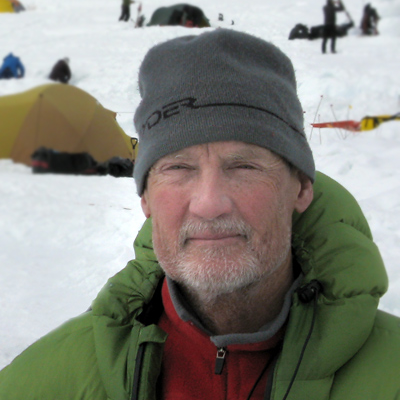
WildSnow.com publisher emeritus and founder Louis Dawson has a 50+ years career in climbing, backcountry skiing and ski mountaineering. He was the first person in history to ski down all 54 Colorado 14,000-foot peaks, has authored numerous books about about backcountry skiing, and has skied from the summit of Denali in Alaska, North America’s highest mountain. He published his memoir, Avalanche Dreams: A Memoir of Skiing, Climbing, and Life in 2024.
